

How to use air fryer properly can save you time, help improve air quality while cooking, and make a real difference in your home kitchen results. Whether you’re brand new to air fryers or want to master all the essentials, this no-nonsense guide will show you exactly what to expect, the smartest steps for success, and what even experienced users often get wrong.
Key Takeaways
- Air fryers emit far fewer volatile organic compounds (VOCs) and ultra-fine particles (UFPs) compared to deep or shallow frying, but only if regularly cleaned [source].
- Skipping deep cleaning causes residue buildup, raising emissions and cutting health benefits over time [source].
- Manufacturer guidance on preheating, oil quantity, and food types is inconsistent—start with small batches and check results in your own device.
- How Air Fryers Work and Why They Matter
- Step-by-Step Guide: Using an Air Fryer
- Advanced Analysis & Common Pitfalls
- Conclusion: Making Air Fryers Work for You
- FAQ: Air Fryer Questions Answered
How Air Fryers Work and Why They Matter
Air fryers use rapid air circulation to crisp food with a fraction of the oil traditional frying requires. Instead of submerging your food in hot fat, a heating element works with a powerful fan to circulate hot air around your ingredients. This creates similar browning and texture to frying, but with minimal oil—making it easier to cut back on excess calories and mess.
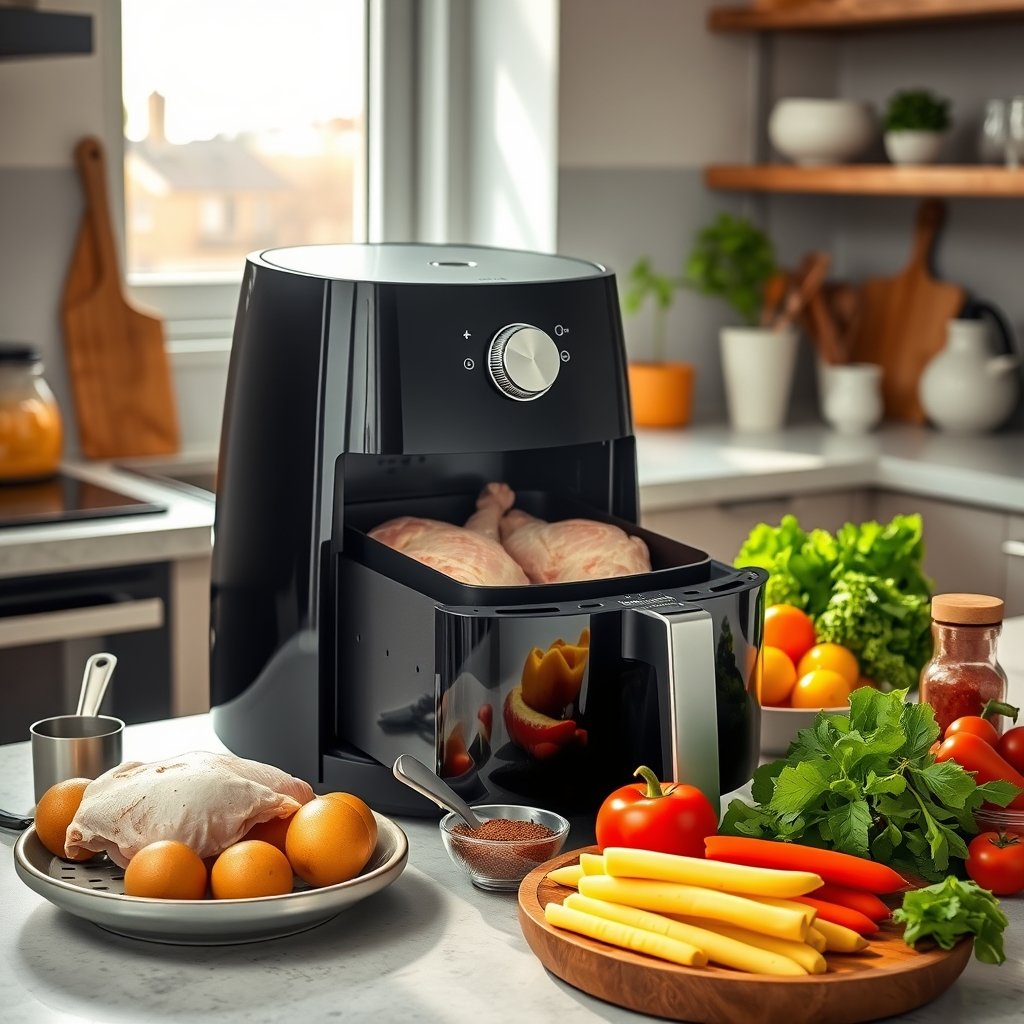
The biggest immediate benefit is better indoor air quality. Peer-reviewed research from the University of Birmingham found that air fryers release 10 to 100 times fewer VOCs than deep-fat fryers—even with foods like bacon or frozen onion rings. This means less kitchen smoke, fewer lingering smells, and a healthier environment for families [study]. These findings are especially relevant if you cook for children, elderly relatives, or spend a lot of time in small kitchens.
Unlike oven baking, air frying gives you the crispy texture people crave without leaving your kitchen smelling like oil for hours. With rising demand for non-toxic appliances, many now choose models with glass bowls or ceramic coatings. Get details on PFAS-free air fryer options if safe materials matter to you.
Step-by-Step Guide: Using an Air Fryer
Getting real results from your air fryer isn’t complicated, but a few key steps make all the difference. Here’s a simple path to reliably crispy food and a cleaner kitchen every time.
1. Prep Your Food
Pat proteins or veggies dry. Toss with minimal oil (½-1 teaspoon per serving enhances browning but isn’t always essential). Season as you like. For breaded foods, press crumbs in firmly so the coating sticks under circulating air.
2. Preheat (If Needed)
Some models require preheating for best results. If yours does, set it to the target temperature and allow 3-5 minutes to heat. Check your manufacturer’s guide—some skip this step, but it helps with even crisping.
3. Arrange Food in the Basket
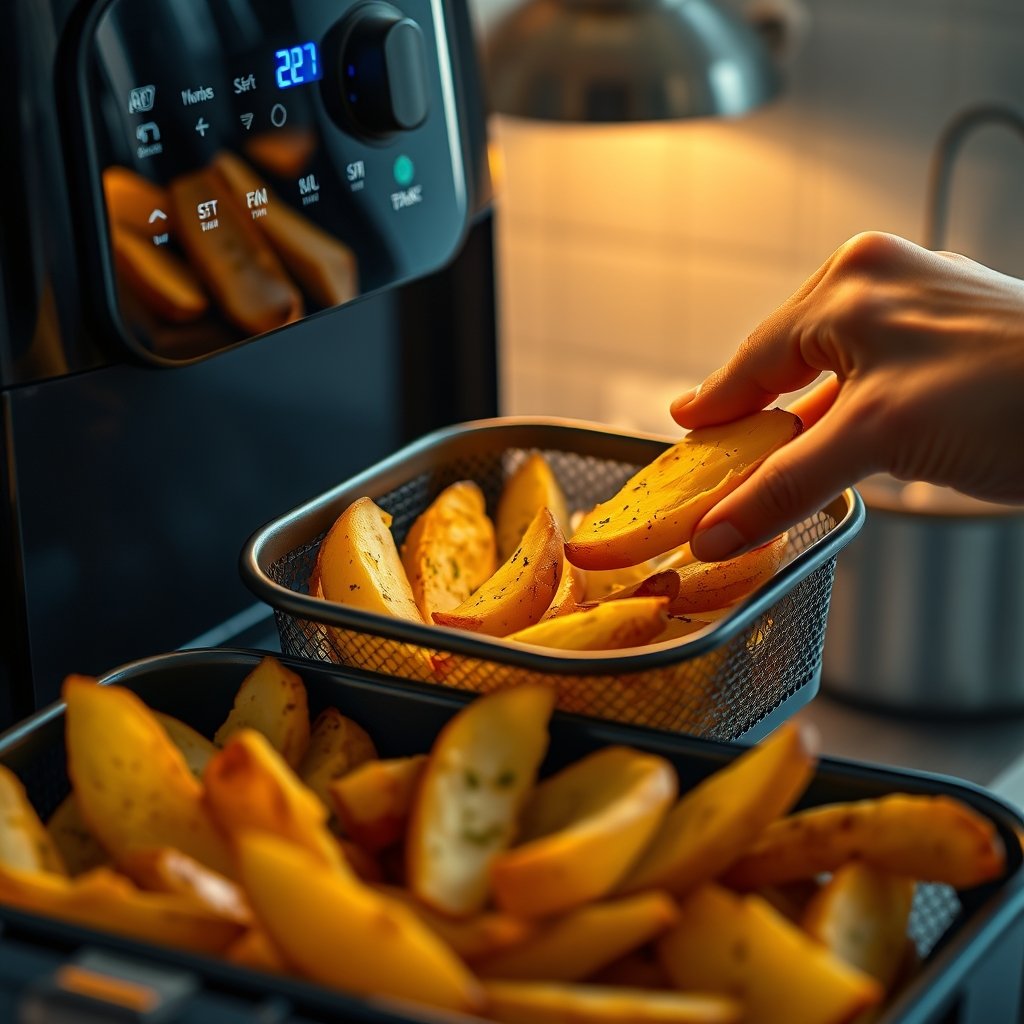
Spread items in a single layer. Don’t overcrowd—even overlapping can prevent full airflow. For batch cooking, do several small loads for consistent crunch.
4. Set Time and Temperature
Most foods air fry well at 350–400°F (175–200°C). For a starting reference, reduce oven instructions by roughly 20% in both time and temperature. Example: If a recipe calls for 425°F for 20 minutes in the oven, try 375°F for 16 minutes in the air fryer—and check doneness halfway. Detailed conversion charts are seldom included by manufacturers, so use this as a baseline and adjust as needed.
5. Shake or Flip Halfway
For fries, wings, or bite-sized items, shake the basket at the halfway mark so everything crisps evenly. Tongs work for larger pieces like chicken or fish. For specific guidance on air fryer salmon or air fryer chicken breast, see our detailed guides.
6. Check for Doneness
Open the basket and inspect food for browning, crispness, and doneness (use an instant-read thermometer if working with meat: 165°F/74°C is a safe target for poultry). Air fryers cook faster than ovens but aren’t foolproof—don’t assume cook times are universal.
7. Clean Immediately After Cooking
Allow the basket to cool, then wash with warm soapy water. If your air fryer parts are dishwasher-safe, use the top rack. Regular cleaning is non-negotiable for both flavor and indoor air safety.
Interested in maximizing kitchen efficiency? Check out how dual zone air fryers let you cook two foods at once or explore premium models with glass air fryer bowls for easier cleaning and peace of mind.
Advanced Analysis & Common Pitfalls
Even with the right habits, air fryer mistakes get repeated by new and advanced users alike. Below, we dive into real research and overlooked problems:
Cleanliness and Air Quality
A University of Birmingham study found that air fryers can emit up to 23% more VOCs and double the UFPs after 70 or more uses without a thorough clean.[study] This contradicts the widespread belief that air fryers are always healthy—maintenance is essential. Deep cleaning all corners of the basket and heating chamber is what preserves the air quality advantage over pan or deep frying.
Table: Air Fryer vs Deep Fryer Emissions
| Cooking Method | VOCs Emitted (Frozen Onion Rings) | Ultra-Fine Particles (UFPs) | Cleaning Sensitivity |
|---|---|---|---|
| Air Fryer (Clean) | Low | Minimal | High (must clean regularly) |
| Air Fryer (Dirty) | +23% vs Clean | Over 2 times more | Very high (residue accumulates fast) |
| Deep Fryer | 10–100x more than air fryer | High | Moderate |
Source: University of Birmingham 2026 study
Other Frequent Issues
- Overcrowding the basket: Reduces airflow, results in soggy fries or undercooked protein.
- Wrong oil or too much oil: Some recipes require almost no oil, others need a little for browning—experiment and start small.
- Not checking compatibility: Foods battered in loose wet coatings or with lots of moisture can make a mess—stick to “dry” coatings or oven-ready freezer foods at first.
- Temperature shock: Pulling frozen or cold food straight from the freezer into a hot basket may sacrifice texture. Thaw or pat dry for best results.
- Poor fit for big families: Standard baskets are small compared to ovens; look for large air fryer models if you batch-cook.
Conclusion: Making Air Fryers Work for You
When used properly, air fryers are an effective alternative to traditional frying. They keep indoor air cleaner, crisp food fast, and minimize oil use—but only if you adjust for overcrowding and always deep clean after heavier use. The biggest hidden risk is letting residue accumulate, which quietly dials up your indoor emissions and erodes air-frying’s main advantage.
Ready to get cooking? Start with straightforward recipes, use your device’s manual as a starting guide, and learn how to use air fryer techniques to fit your family’s eating habits. Want to compare top brands, bowl materials, or energy consumption? Explore our model guides and health-focused resources—or share your questions below!
FAQ: Air Fryer Questions Answered
Do you need to add oil to an air fryer?
You can cook most foods with no oil, but adding ½–1 teaspoon helps with browning and crispy results. Some recipes like breaded chicken need a touch for best texture, while frozen fries are designed to air fry oil-free.
What foods should never go in an air fryer?
Foods in wet batter (tempura, pancake-style) drip through the basket and can cause a mess. Avoid water-heavy veggies (like raw tomatoes) unless roasting in small pieces. Wax paper, plastic, or glass without an air fryer-safe label should never be used.
How often should you deep clean your air fryer?
Give your air fryer a full, deep clean every 10–15 uses or whenever you notice greasy buildup. More frequent cleaning is needed after cooking fatty foods like bacon or sausages.
Can you cook meat and vegetables at the same time?
Yes, using models with dual baskets or by grouping foods by similar cook times. For standard baskets, stagger loading to ensure both items cook evenly. See our dual zone air fryer guide for details.
Is air frying really healthier than oven or pan frying?
Air fryers produce fewer emissions and require less oil than pan frying, keeping indoor air cleaner. Research is ongoing about nutritional differences and health impacts—always combine air frying with a balanced diet for best results.