

Ninja dual basket air fryers is a comparison every kitchen appliance shopper faces today. If you’re stuck between these two popular air fryer types, you’re not alone. This guide breaks down everything that matters—price, real kitchen performance, issues, and who should buy what—for an informed, regret-free purchase.
Key Takeaways
- Ninja dual basket air fryers offer family-sized capacity and 2-zone flexibility, but cost about $100 more and take longer to cook when using both baskets fully.
- Single basket models are faster for small loads, easier to clean, and ideal for singles or couples—but lack the versatility of cooking multiple dishes at once.
- Neither dual nor single basket models have clear energy usage statistics; long-term reliability and daily operating cost comparisons are still missing from most reviews.
- The Core Concept: Ninja Dual Basket vs Single Basket Air Fryer Explained
- Step-by-Step Guide: Choosing the Right Ninja Air Fryer for Your Kitchen
- Advanced Analysis & Common Pitfalls
- Conclusion
- FAQs
The Core Concept: Ninja Dual Basket vs Single Basket Air Fryer Explained
When deciding between Ninja’s dual basket and single basket Ninja models, you’re really deciding how you want to use your countertop appliance. A dual basket air fryer (like the Ninja Foodi DualZone) is designed for those who regularly prepare full meals or need to cook two dishes with different timings and settings. In contrast, a single basket Ninja (such as the Pro) is often cheaper, faster for small portions, and easier to clean. Your choice impacts not just cooking flexibility, but also price, energy use, and kitchen workflow.
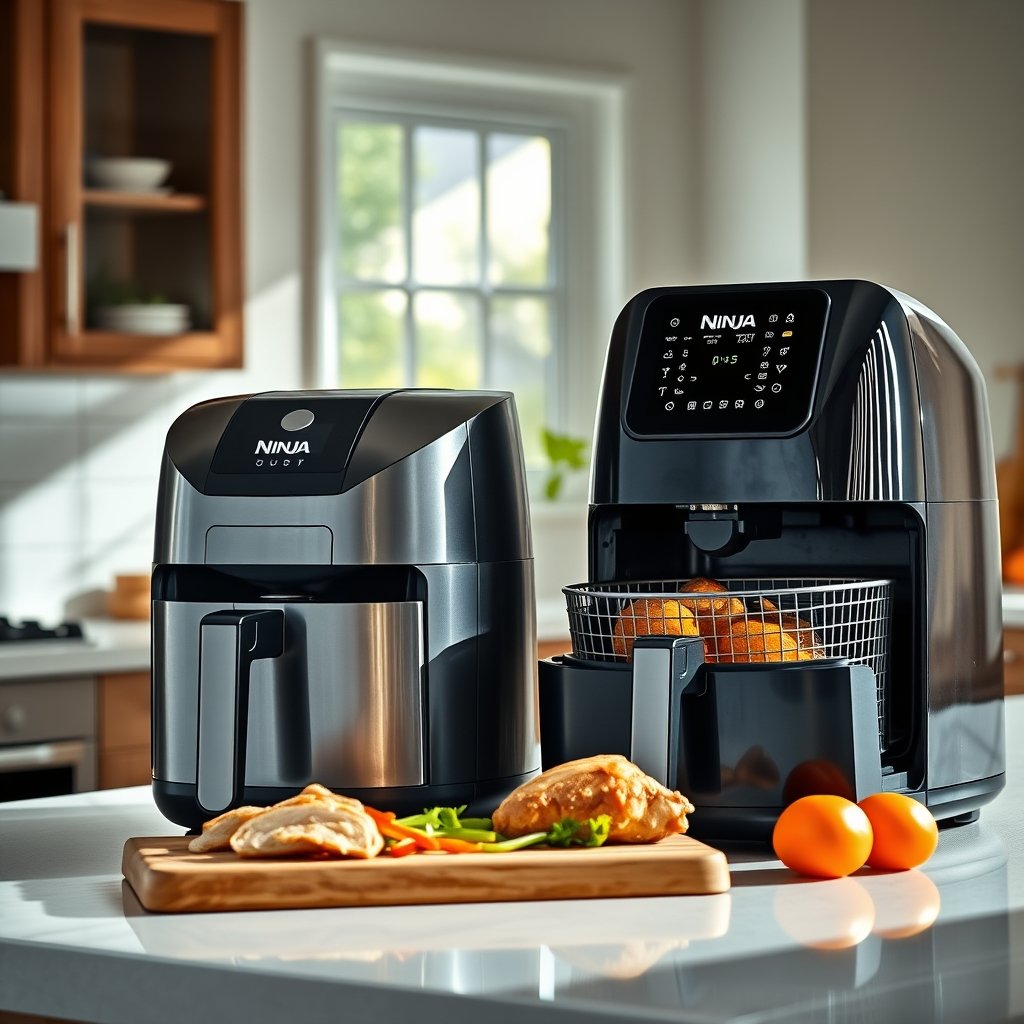
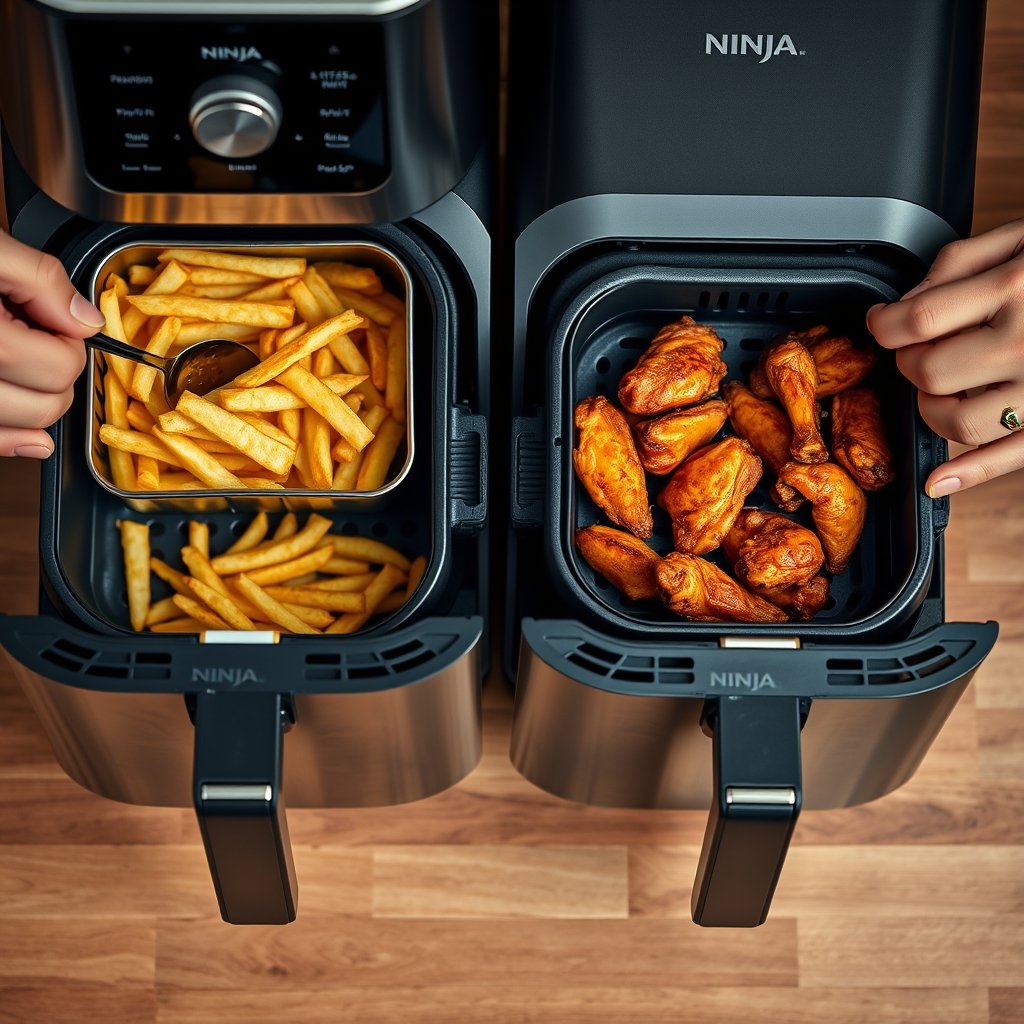
The core difference comes down to capacity and cooking style. Dual basket models provide up to 10 quarts (two 5-quart baskets) and can sync two different dishes with different temperatures and times. This is ideal for families or entertaining. Single basket models top out at around 5-6 quarts and work best for one main dish or batch of fries—perfect if you’re just cooking for yourself or a couple.
For a deep look at market-defining air fryer battles, see our Ninja vs Cosori air fryer comparison and how these systems stack up for busy kitchens.
Step-by-Step Guide: Choosing the Right Ninja Air Fryer for Your Kitchen
-
Determine portion needs and kitchen routine.
- If you routinely prep multiple foods for 2 or more people (main plus sides, or picky eaters), dual basket is usually worth it. For solo or small couple meals, stick to a single basket model—faster and uses less power.
-
Compare purchase price and ongoing costs.
- As of 2024, expect to pay $179–$220 for a dual basket Ninja and $120 for a single basket Ninja Pro, depending on discounts (source). Remember, dual models use higher wattage—full baskets mean more energy per use.
-
Decide if split-zone versatility and “Smart Finish” justify extra cost.
- The dual’s key trick is syncing two foods (for example, crispy wings and roasted veggies) that finish at the same time. If you’re always multi-tasking at dinnertime, this may be value for money.
-
Review cleaning and maintenance realities.
- Dual baskets mean more surface area and two ceramic trays to wash. Single-basket units can be easier and faster to maintain.
-
Check your kitchen counter space.
- Dual basket units are significantly larger. Measure before you buy!
-
Think about usage scenarios missed by most reviews.
- Long-term reliability, actual kWh energy use, and single-person efficiency rarely get covered but matter over years of regular use (review source).
If health is a top priority, check out our air fryer PFAS free 2026 guide for the latest on ceramic and glass-coated options, including models designed for toxin-free cooking.
Advanced Analysis & Common Pitfalls
Both the Ninja dual basket and single basket air fryer have clear pros and cons, but a few issues repeatedly catch new users by surprise. Here’s a straightforward look at what you might encounter, based on real reviews and head-to-head tests:
| Feature | Ninja Dual Basket | Ninja Single Basket |
|---|---|---|
| Capacity | 10.1 quarts (two 5-quart baskets), suits family meals, up to 6 lbs wings | 5-6 quarts, best for 1-3 people |
| Price (2024 avg.) | $179–$220 (often discounted on Amazon) | $120 or less |
| Running Cost | Higher—the dual fans and larger volume use more power, especially for two baskets running | Lower—for small batches or light daily use |
| Speed | Slower when using both baskets (e.g., 19 minutes to crisp fries vs single) | Faster for single loads and basic meals |
| Cleaning | Harder—ceramic trays can be stickier than classic nonstick and require more effort | Easier—one tray, smaller size |
| Heat Distribution | Occasional heat transfer or uneven crisp if both baskets overloaded or different items | No dual-zone issues—more even result for same-loads |
| Best For | Families, batch prepping, multi-dish meals, picky eaters | Singles, couples, small kitchens, quick meals |
| Drawbacks | Bulky size, longer cleaning, extra cost, reports of longer cook time for sides or full loads | Limited batch size, cannot sync multiple foods at once |
| Not Addressed | No hard kWh data, long-term breakdown rates, small household scenarios can waste power | n/a |
Some users also note that dual baskets cook frozen fries slower and that cleaning two ceramic trays is less convenient than older-style nonstick trays (watch full review). If you frequently cook for just yourself, running only one basket on a dual model may be wasteful both for space and energy—this is rarely flagged in glossy comparison posts.
If you want to see how other brands compare and balance these trade-offs, read our Philips air fryer vs Ninja review and our breakdown of Breville vs Ninja air fryer for premium kitchen alternatives.
Concerning health and durability, newer Ninja models feature PFAS-free ceramic but may be harder to scrub; for insights into the latest glass and ceramic air fryer tech, see Ninja Crispi vs Ninja Foodi, covering innovations that matter for safety-focused buyers.

Conclusion
To sum up, Ninja dual basket air fryers are best for multi-dish, high-capacity meal prep, syncing timing and temperatures for real family versatility. Single basket Ninja air fryers offer speed, value, and easy cleaning for everyday simple meals or small households. Both types deliver healthy, crispy results—just weigh your routine, counter space, and willingness to clean. The choice depends on how you actually cook.
If you’re deciding on a Ninja dual basket vs single basket air fryer, start with your real kitchen needs, not just features. Measure your space, compare current prices, and don’t forget about cleanup or regular costs. Still need deep-dive brand guidance? Explore our expert air fryer head-to-heads or Ninja vs Cosori air fryer for a full breakdown. Ready to upgrade your kitchen? Choose smart for your cooking style!
FAQs
Is the Ninja dual basket air fryer worth the higher price over single basket models?
If you regularly cook full meals with multiple dishes or feed a family (2+ people), the dual basket saves time and offers more flexibility. For singles or couples making basic meals, the single basket is faster and better value.
Which Ninja air fryer cooks food faster?
Single basket models reach crispiness and finish meals more quickly for small to medium batches. Dual baskets can be slower if both are packed, due to heat distribution across two chambers.
How hard is cleaning the dual basket Ninja air fryer?
Cleaning is noticeably more demanding: two larger baskets and ceramic crisper trays take more scrubbing and time, especially after messy foods. Single basket models have less surface to clean and may use classic nonstick trays.
Do Ninja air fryers have any PFAS or Teflon coatings?
Recent Ninja models use ceramic nonstick trays that are PFAS and PTFE free. This is a benefit for health-conscious buyers, but ceramic can be harder to keep spotless than older Teflon coatings. See our detailed guide on PFAS free air fryers for more info.
What about actual energy costs for Ninja dual vs single basket air fryers?
Precise energy usage (in kWh) is rarely published. Dual baskets use more power when both sides run on max. For daily single-person use, a single basket is more efficient, but most reviews only estimate—not measure—costs.