

Air fryer meal prep is rapidly changing how busy households batch-cook nutritious meals, making weekly prep faster, healthier, and more convenient than ever before.
Key Takeaways
- Air fryer meal prep cuts cook times by up to 25 percent and uses up to 70 percent less fat compared to traditional methods.
- The global air fryer market is projected to double by 2034, with demand for large-capacity and multifunction units surging as batch cooking trends grow.
- Smart planning—like multi-batch rotations and choosing the right air fryer size—solves most meal prep pain points, but uneven cooking and space limits remain real issues.
- What is Air Fryer Meal Prep and Why Is It Booming?
- How to Meal Prep in an Air Fryer: Step-by-Step
- Advanced Analysis & Common Pitfalls of Air Fryer Meal Prep
- Conclusion: Getting the Most From Air Fryer Meal Prep
- Air Fryer Meal Prep: FAQs
What is Air Fryer Meal Prep and Why Is It Booming?
Air fryer meal prep means using an air fryer—especially large-capacity or dual-basket models—to prepare several meals or proteins in one session, ready to portion out across days. With air fryers, you cut oil, calories, wait times, and kitchen hassle. This approach is ideal if you want high-protein lunches, healthy dinners, or snacks ready for the week—all cooked faster and with less cleanup than conventional stoves or ovens.
The numbers show why this trend exploded. In 2024, nearly 60 percent of American homes and 58 percent of British households own an air fryer, a shift that now rivals and even surpasses traditional oven usage [Source]. In fact, sales of air fryer oven and toaster oven combos—which suit batch cooking—reached $0.9 billion in global revenue in 2024 alone.
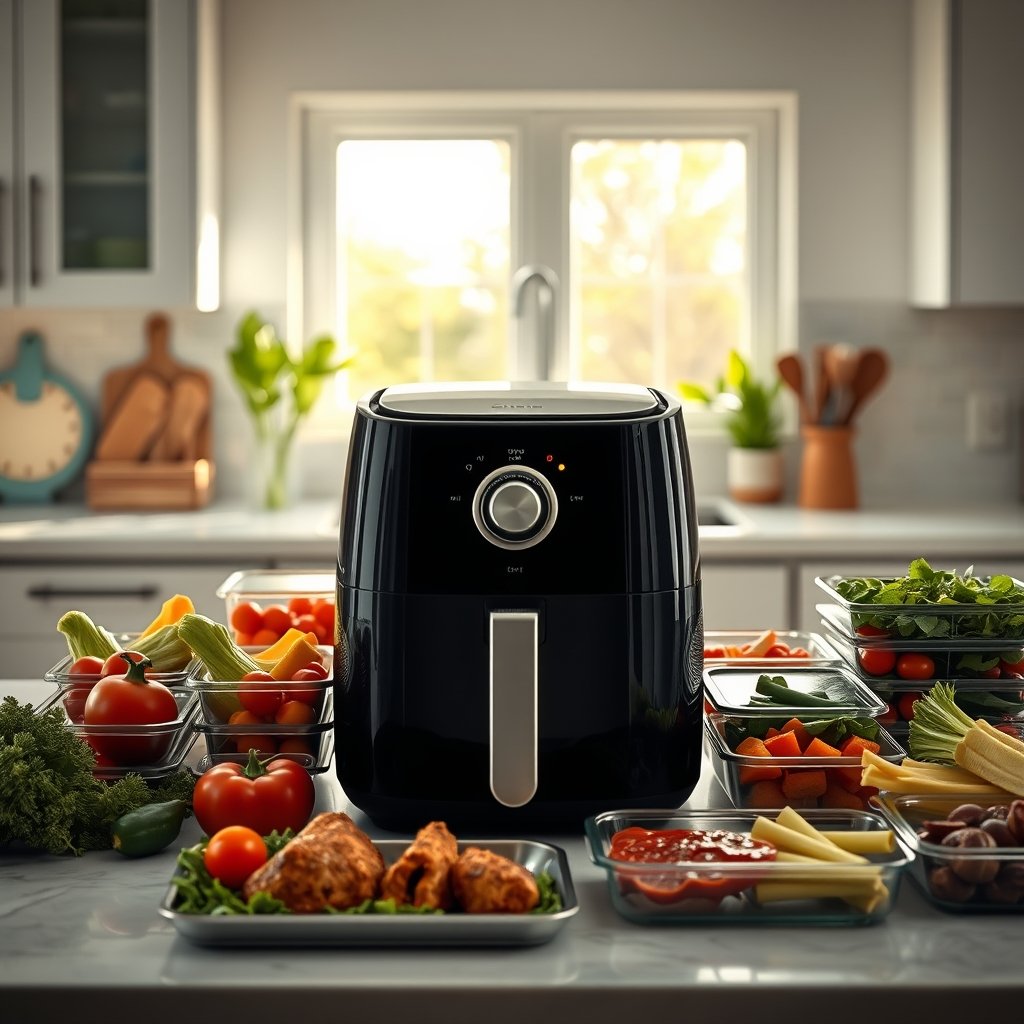
The primary drivers are convenience, healthier results, and real energy savings. Modern meal preppers favor air fryers for their ability to reduce cooking times by up to 25 percent over ovens, while using 70 percent less fat than deep frying [UK Market Report]. The appetite for air fryer meal prep is evident in the rapidly growing recipe catalogs—from near zero in 2020 to 70 or more standardized recipes just four years later [Good Food Nation 2024].
If you’re prepping meals for a family or want to batch-cook efficiently, unit selection matters. Larger-capacity ovens and dual-basket models enable multiple dishes at once.
How to Meal Prep in an Air Fryer: Step-by-Step
Ready to streamline your weekly food routine? Here’s a proven framework, whether you use a big dual-basket unit, an air fryer oven combo, or the classic basket design:
-
Pick the Right Air Fryer for Your Batch Size
Choose a 6- to 10-quart capacity for batch cooking or large family needs. For more on size and power options, see our Ninja vs Cosori comparison. -
Choose Bulk-Prep Friendly Recipes
Opt for high-protein meals like air fryer chicken breasts, turkey meatballs, tofu, roasted veggies, or salmon. These proteins hold up best for make-ahead meals. Basket models suit single proteins, while oven-style or dual-basket units handle sides simultaneously. For inspiration, our air fryer oven combo guide explores versatile options. -
Prep Your Ingredients
Chop, slice, marinate, or season all your components at once. Use stackable trays or racks (where available) to maximize surface area and airflow. -
Stagger or Rotate During Cooking
Since air fryer “hot spots” can cause uneven browning, swap layers or rotate baskets halfway. Don’t overcrowd. Use parchment inserts for easy transfer and fast cleanup. -
Batch and Store
Let everything cool before portioning into containers. Label, date, and refrigerate or freeze as needed.
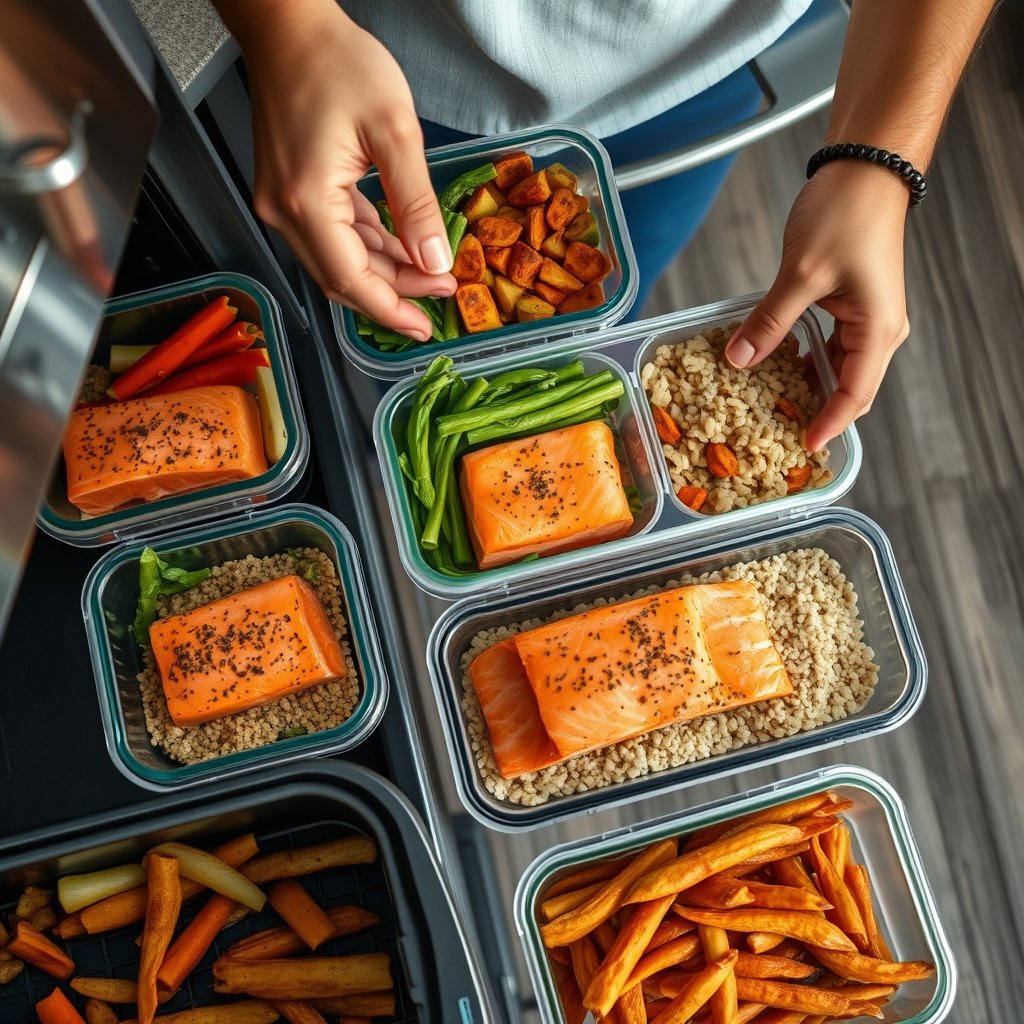
- Embrace batch-friendly accessories. Stackable racks and silicone muffin liners make multi-item cooking snappy and nonstick. See our review of ceramic air fryer baskets for safe, toxin-free insert ideas.
- Test doneness early. Air fryers cook food 20 to 25 percent faster than ovens [FoodNavigator], and overcooking can dry out protein.
- Cool before sealing. To prevent soggy meals, let food steam off for a few minutes before closing containers.
These steps work with any modern model, but adjusting timing, spacing, and tray configuration is critical—especially with high-wattage, large-capacity air fryers.
Advanced Analysis & Common Pitfalls of Air Fryer Meal Prep
Despite the clear advantages, several real-world pitfalls can turn air fryer meal prep from a time saver into a headache:
- Capacity Can Be Limiting: Most standard air fryers (mean 1425 watts, 800-2175W range) top out at 6- to 10-quart capacity—enough for four to six meals at a time, but not for large-scale batch sessions. Overfilling or layering can cause uneven cooking.
- Hot Spots & Uneven Cooking: Air fryers use fan-driven heat, but crowded baskets or poor airflow can lead to undercooked or over-browned spots, especially on proteins stacked too tightly.
- Bulk Batching = More Rotations: Cooking large amounts still requires cycling in batches. If you need 10+ meals, anticipate multiple sessions or choose a combo style unit—see the air fryer oven combo guide for capacity solutions.
- Noisy or Long Preheat for Ovens: Some air fryer ovens require a preheat, which can offset time savings.
- Less Versatile for Liquid Dishes: Stews, soups, or sauced items aren’t ideal for basket-style air fryers. Stick with firm proteins, firm veggies, or items that bake/roast well.
- Higher Price for Large Models: Large-capacity or oven-style air fryers cost noticeably more upfront—though ongoing energy use is lower than ovens. For a direct comparison on efficiency, check out our guide to air fryer electricity usage.
| Factor | Air Fryer Meal Prep | Traditional Oven/Stovetop Prep |
|---|---|---|
| Average Cooking Time | 20-25% Faster | Standard (slowest for baked proteins) |
| Batch Size | 4-6 meals per cycle (large units) | 6-12 meals (large pans or trays) |
| Energy Usage | Lower (800-2175W, short cooking cycle) | Higher (2000-5000W, longer cycle) |
| Evenness | Can be uneven if overcrowded | Generally even (more space, large trays) |
| Cleanup | Fast (removable baskets/trays) | Medium (multiple pans, large racks) |
While air fryer meal prep won’t solve every problem, it’s ideal for anyone focused on high-protein, portioned meals and those watching energy or fat intake.
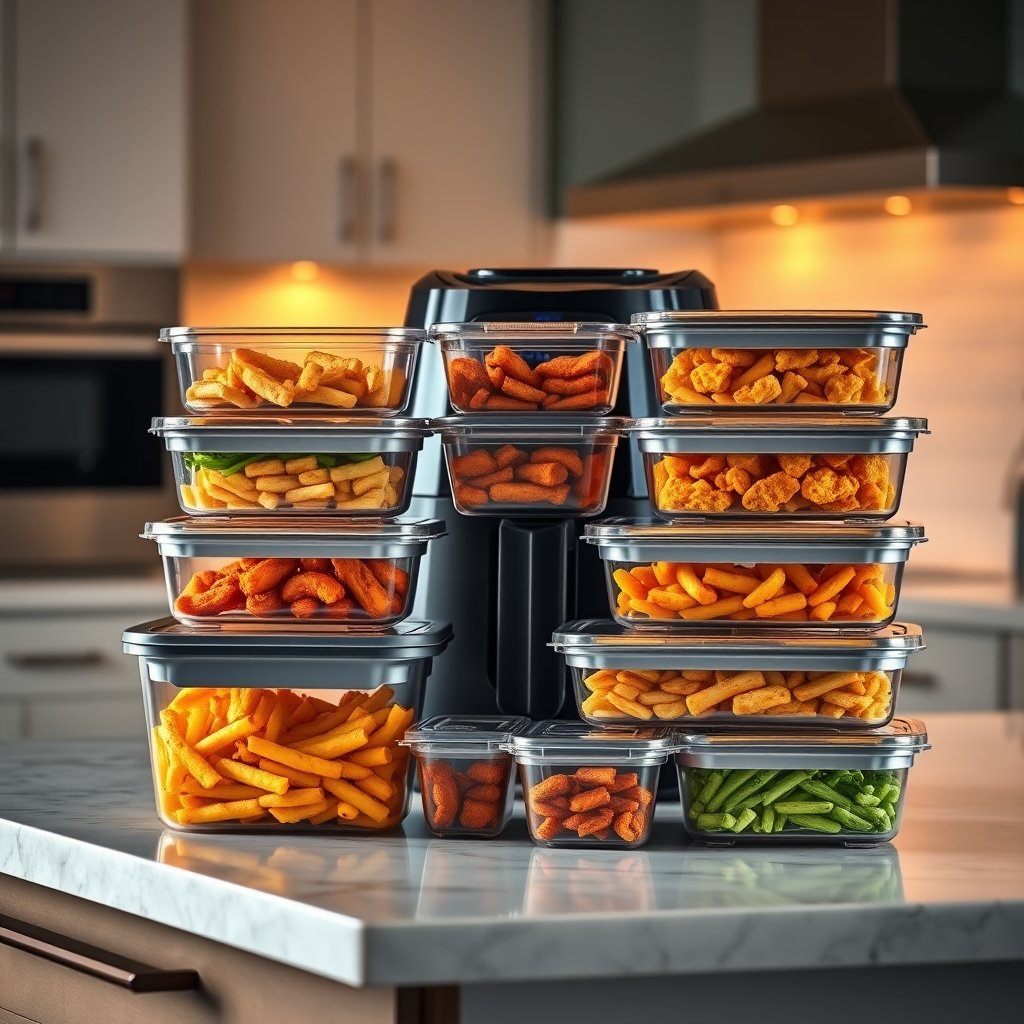
Conclusion: Getting the Most From Air Fryer Meal Prep
Air fryer meal prep lets you batch-cook healthier, high-protein meals much faster and with less fat than traditional methods. While capacity and slight unevenness are real issues, smart use of appliances, accessories, and pre-planned rotations can turn an ordinary Sunday meal prep into a streamlined weekly win.
Want even more options or need a buying decision? Explore PFAS-free air fryer picks or our review of stainless steel interior models. Give air fryer meal prep a try this week, and taste the difference in speed, ease, and health. Ready to level up? Start now and enjoy your healthiest, most efficient batch cook ever.
Air Fryer Meal Prep: FAQs
What air fryer size is best for meal prep?
For meal prep, a large air fryer—minimum 6 quarts, ideally up to 10 quarts—is best. This allows you to cook 4 to 6 meals per cycle. If you often prep for a family, look for dual-basket or oven combo models. See our guide for more.
Does air fryer meal prep really save time?
Yes. Air fryers reduce cooking time by 20-25 percent over ovens. They also preheat quickly, so total session time is considerably less for most proteins and roasted vegetables.
Are air fryers cheaper to run than ovens for bulk cooking?
Generally yes. Air fryers draw between 800 and 2175 watts and have shorter cook times. Most users notice energy savings, especially with repeated batch use. For an apples-to-apples energy use guide, see this article.
Can you prep high-protein meals in an air fryer for the whole week?
Absolutely. Popular air fryer meal prep options include chicken breast, salmon, tofu, meatballs, and roasted chickpeas. They keep well and reheat evenly throughout the week. Batch size limits still apply with standard units, so plan accordingly.
What’s the biggest mistake people make with air fryer meal prep?
Overcrowding the basket or trays. This leads to uneven cooking and soggy textures. Always leave room for the air to circulate, and rotate or shake halfway through cooking if making multiple layers.