

### Blog Post:
Dual zone air fryer technology is changing the way busy households cook, promising faster and more versatile meal prep. In this guide, we dive into the facts, tech details, real-world pitfalls, and actionable tips you need to know before you buy or upgrade.
Key Takeaways
- Dual zone air fryers allow you to cook two foods at different temperatures and times, streamlining family meal prep.
- The market for dual basket and dual zone air fryers is rapidly growing, but clear data on cost, energy use, and performance is still limited.
- Understanding capacity, wattage, and potential issues helps you select the right model for your kitchen and avoid common frustrations.
- What Is a Dual Zone Air Fryer and Why Are People Upgrading?
- How to Get the Most from Your Dual Zone Air Fryer: Step-by-Step
- Advanced Analysis & Common Pitfalls
- Conclusion: Is a Dual Zone Air Fryer Right for You?
- FAQs
What Is a Dual Zone Air Fryer and Why Are People Upgrading?
A dual zone air fryer is a countertop appliance that has two independent cooking baskets or zones. This design lets you prepare two separate foods at once, each at different temperatures and times. Unlike single-basket models, you can air fry chicken in one zone while roasting vegetables in the other.
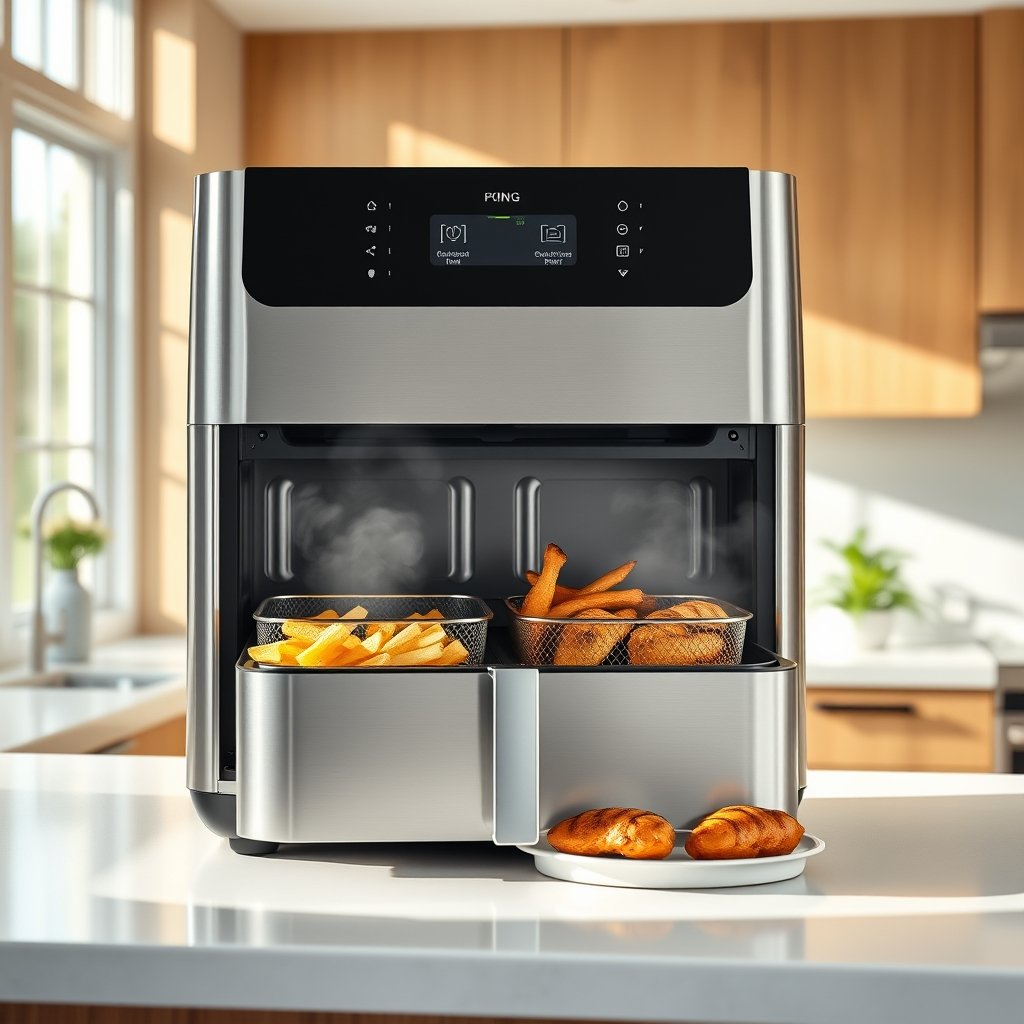
Busy families and health-conscious cooks are driving adoption. The global dual-zone air fryer grill market hit USD 1.16 billion in 2024. Features like “Sync Cook” and “Sync Finish” let you match cooking types or finish times, minimizing wait and work. Demand is highest in North America and Asia-Pacific, as home cooks seek to simplify meal routines and eat healthier.
The broader air fryer market is expected to reach up to USD 2.07-2.9 billion by 2030–2034, growing with dual-income households seeking time-saving kitchen solutions.
If you want to compare how dual zone models stack up to alternatives, see this head-to-head on Ninja dual basket vs single basket air fryer and our full dual zone air fryer guide.
How to Get the Most from Your Dual Zone Air Fryer: Step-by-Step
-
Choose the right size and wattage.
For families, pick at least a 7–10 quart capacity and check for 1,500–1,700W power to ensure fast preheating and even crisping. Smaller models may struggle with large batches. -
Preheat both zones (if needed).
Most models don’t strictly require preheating, but doing so improves results for baked goods or thicker proteins. -
Set different times and temperatures for each zone.
Use the control panel to match the requirements of each food. For example, you might set one basket at 400°F for fries and the other at 350°F for salmon. -
Use “Sync” or “Match” features for easy coordination.
On Ninja and similar models, you can sync both baskets to finish together even if cook times differ. This is great for cooking proteins and sides simultaneously. -
Mid-cook shake or swap as needed.
Even with advanced air flow, shaking or rotating baskets mid-cook helps prevent uneven browning. -
Clean after every use.
Remove baskets and trays, soak in warm soapy water, and avoid metal utensils to preserve the nonstick coating.
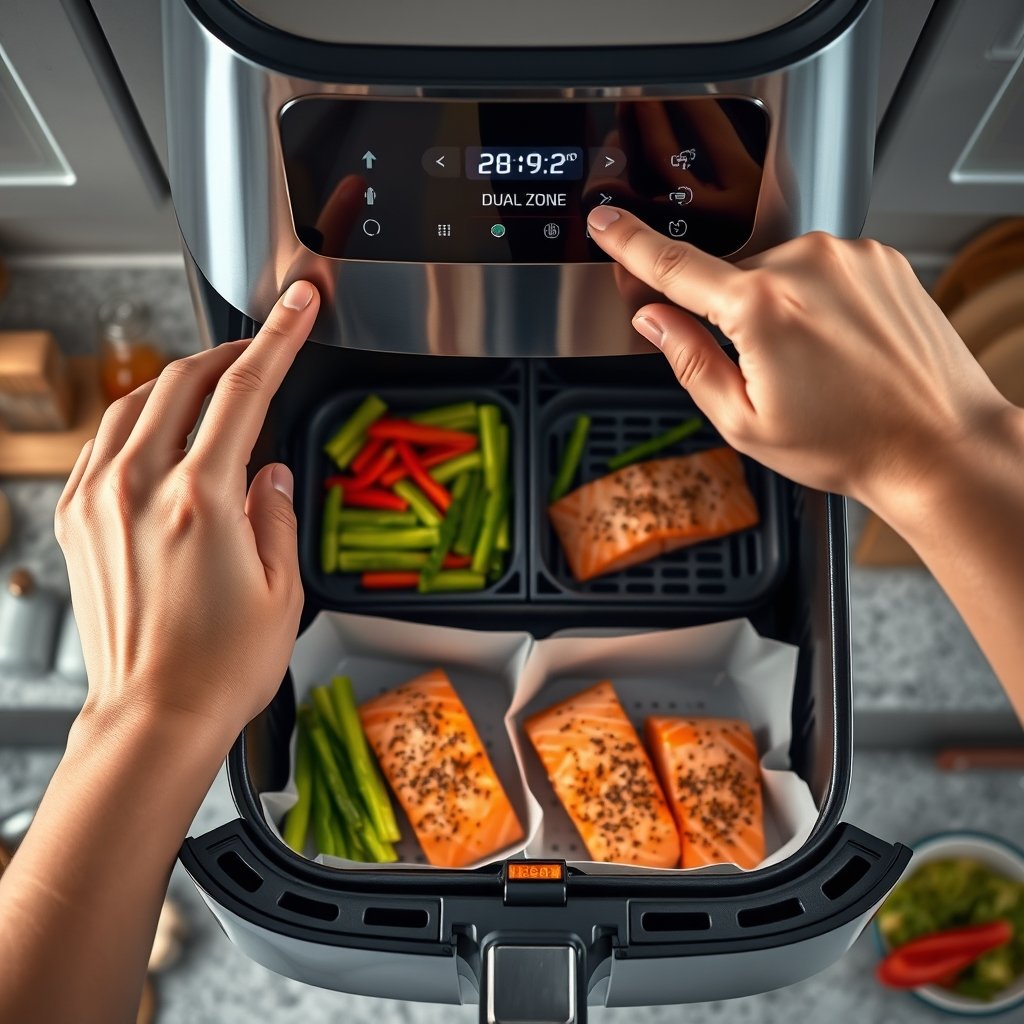
For more detailed meal prep strategies, check out our air fryer meal prep guide and comparison of best air fryers for large families.
If energy use matters, see how Ninja stacks up in efficiency against Philips in our energy consumption comparison.
Advanced Analysis & Common Pitfalls
Dual zone air fryers are advanced, but not fail-proof. Here are the real-world problems you might face, with analysis grounded in market data and engineering principles.
- Uneven cooking between baskets: If you overload one side or cook foods needing different airflow, results can differ. Smart features help, but user trial and error still matters.
- Bigger is not always better: While capacity is essential, oversized appliances take up more space, use more energy, and cost more—without always improving results if you mainly cook for one or two people.
- No perfect cost or energy data: Despite the boom, there are no solid studies showing dual zone air fryers are more energy efficient than single basket models per meal. Expect similar running costs per wattage and output.
- Cleaning complexity: More baskets and dividers mean more to clean. Busy users sometimes neglect a thorough wash, leading to odors and stuck-on debris.
- Nonstick coating wear: Some models still use Teflon or other PFAS-based coatings, which may wear or flake over time. For the safest picks, consider a PFAS-free air fryers.
| Feature | Dual Zone Air Fryer | Single Basket Air Fryer |
|---|---|---|
| Number of Cooking Zones | 2 (independent settings) | 1 |
| Capacity Range | 7-10+ quarts | 2-6 quarts |
| Wattage Typical | 1,600–1,850W | 1,200–1,500W |
| Best for | Families, meal prep, batch cooking | Singles, couples, side dishes |
| Counter Space Needed | High | Low-to-medium |
| Cleaning Time | More (2+ baskets) | Less (1 basket) |
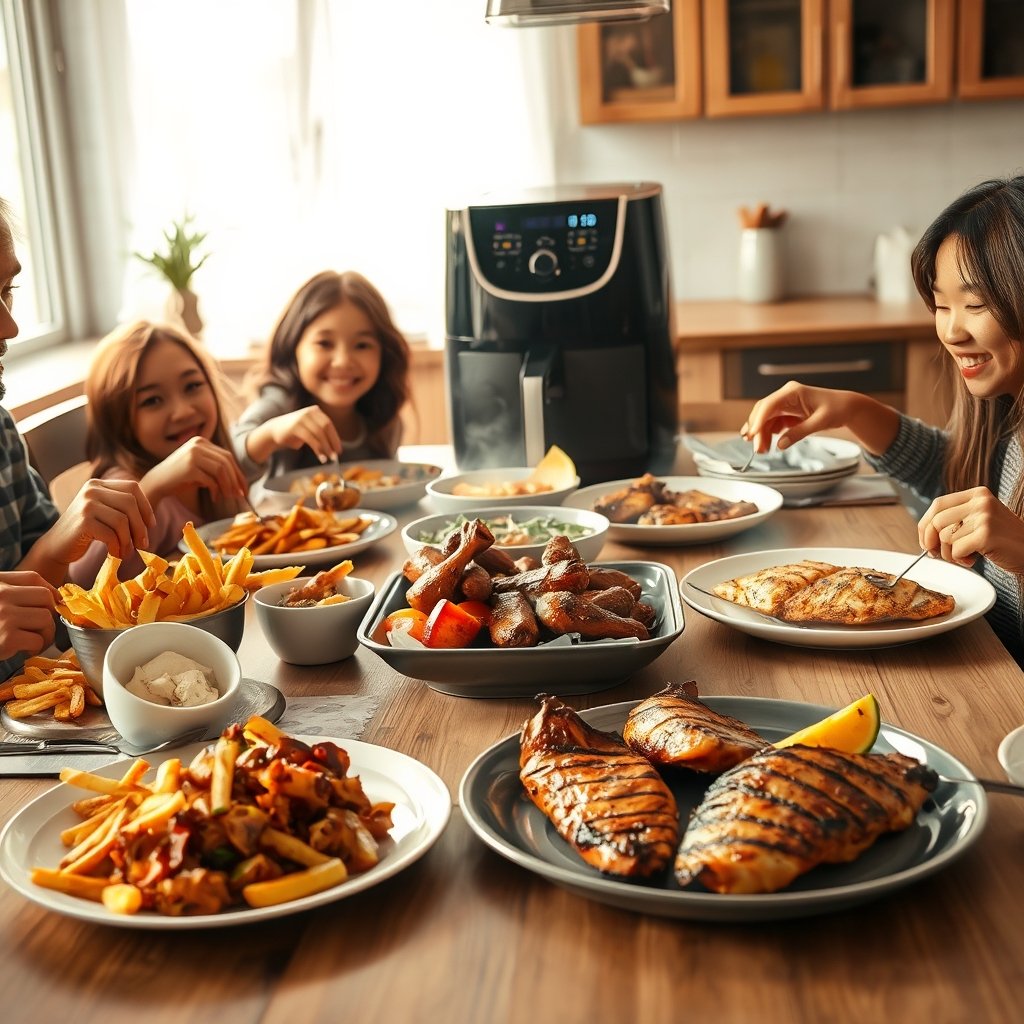
If design, health, or batch cooking matters most to you, take a look at best-selling alternatives like the Ninja Crispi or see options for PFAS-free air fryers.
Conclusion: Is a Dual Zone Air Fryer Right for You?
Dual zone air fryers offer a genuine upgrade in convenience and meal versatility, especially for families or anyone who batch preps food. While there are still unknowns about energy savings and cost comparison, the time you save may outweigh minor downsides like extra cleaning and higher price.
If you cook for four or more, or want the ultimate flexibility, a dual zone air fryer can make weeknight dinners much easier. Consider your space, budget, and the foods you love most, then use the guides above to compare models smartly. Ready to try it? See our latest Buyer’s Guide here.
FAQs
How much countertop space does a dual zone air fryer need?
Most dual zone air fryers need about 16–18 inches of width and 12–14 inches of depth. Check your model’s specs to ensure it fits your space before buying.
Can you cook two foods at totally different temperatures at the same time?
Yes, that’s the core feature. Each basket can operate independently, letting you match different foods to their optimal temps for the best results.
Is there a significant difference in energy use compared to single basket air fryers?
Direct studies are lacking, but wattage and energy use are typically higher due to the larger size. However, cooking two foods at once may offset the extra power required by reducing overall cooking time per meal.
Are there nonstick or health coating concerns with dual zone models?
Yes, like all air fryers, some use Teflon or related nonsticks. For safer alternatives, look into models with ceramic or stainless steel interiors, which are now trending for health-conscious families.
What is the best-sized dual zone air fryer for a family of five?
A model with a combined capacity of 8–10 quarts (or about 7–9 liters) is ideal. This lets you cook a protein and side at the same time without crowding the baskets.
—