

### Blog Post:
PFAS-free air fryer demand has exploded in recent years as health-conscious cooks try to avoid “forever chemicals” in their kitchens. However, actually finding a true PFAS-free or non-toxic air fryer in 2026 is harder than most guides admit. This post cuts through marketing claims and confusion, giving you realistic, step-by-step advice for choosing a safe air fryer that actually meets modern health standards.
Key Takeaways
- PFAS-free air fryers are still a limited share of the market; most models use traditional non-stick coatings unless clearly stated otherwise.
- There’s no official regulation or certification for PFAS-free air fryers as of 2026, so verifying a non-toxic option means carefully reading manufacturer disclosures and materials lists.
- Materials like ceramic, glass and stainless steel are widely recommended as the truly safe alternatives, but model availability and size options may be limited.
- What Is a PFAS-Free Air Fryer? Why It Matters in 2026
- How to Choose a PFAS-Free Air Fryer in 2026 (Step-by-Step Guide)
- Advanced Analysis & Common Pitfalls of Shopping for Non-Toxic Air Fryers
- Conclusion: How to Safely Buy a PFAS-Free Air Fryer
- Frequently Asked Questions (FAQ)
What Is a PFAS-Free Air Fryer? Why It Matters in 2026
A PFAS-free air fryer is built without chemical coatings like PTFE (commonly known as Teflon) or other per- and polyfluoroalkyl substances (“forever chemicals”). Instead, it uses safe materials on all food-contact surfaces, such as ceramic, glass or stainless steel. These options are designed to avoid the risk of chemicals leaching into your food, especially when cooking at high heat or after repeated use.
This matters because traditional non-stick coatings can degrade over time, especially if scratched or overheated. Toxin release into food is a concern, particularly for people looking to eliminate unnecessary chemical exposure in their kitchens. According to multiple expert guides, persistent demand for non-toxic cooking has driven brands like Aria, Typhur and Wonder Oven to launch ceramic-only or chemical-free models, yet these remain a fraction of available units on the market. Reference
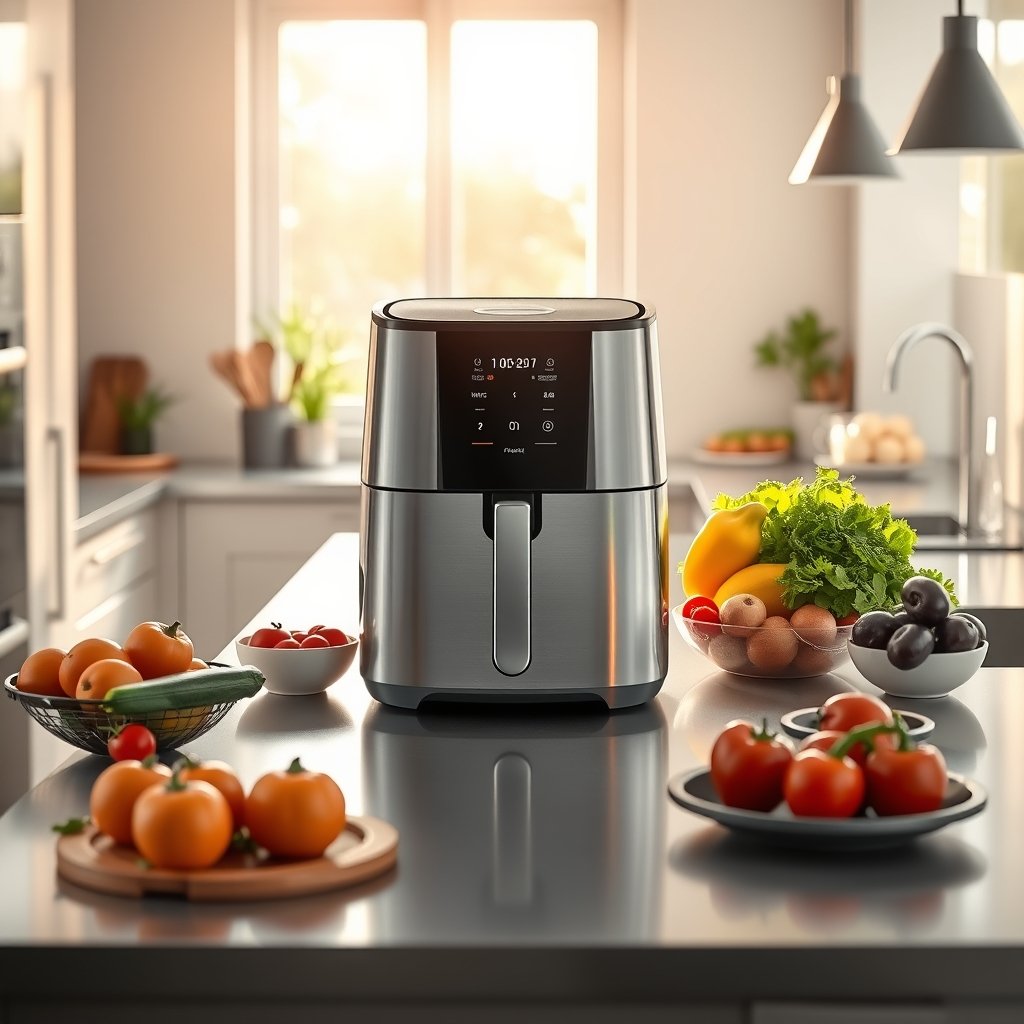
Health concerns over “forever chemicals” have become so widespread that PFAS-free searches now regularly surge in kitchen appliance categories. While some major brands have responded with safe-material models, real-world availability — especially for large families or premium users — remains limited and confusing. For those upgrading, the interior basket and crisper plate material are the most critical features to investigate.
Still deciding between major brands? See our in-depth coverage on the Ninja vs Cosori air fryer as both have released updated models with new claimed coatings in 2026, but only select SKUs are marketed as PFAS-free.
How to Choose a PFAS-Free Air Fryer in 2026 (Step-by-Step Guide)
-
Read all manufacturer materials statements — do NOT assume “non-stick” means safe.
- Unless “PFAS-free,” “PTFE-free,” or “free from Teflon” is clearly stated, most air fryers still use traditional non-stick coatings.
- If in doubt, write to customer support for official documentation.
-
Prioritize models with ceramic, glass, or stainless steel cook baskets.
- Top picks include Typhur Sync (ceramic-coated), Aria 7-quart (fully ceramic basket), and Wonder Oven Pro (ceramic bake pan).
- See a consumer-tested list at Zendaguide.
-
Avoid misleading labels like “PFAS-Free Exterior” — only food-contact parts count.
- If the brand only advertises a “chemical-free crisper plate,” check if the basket or tray includes PTFE or other chemical coatings.
-
Think size—large, family-sized PFAS-free air fryers (6+ quarts) are scarce.
- Aria’s 7-quart ceramic basket is one of few genuine options for larger households.
- For single or couple use, there are more compact non-toxic models available.
-
Look for third-party reviews and independent testing, not just brand claims.
- As there are no official standards or certifications as of 2026, consumer diligence is critical.
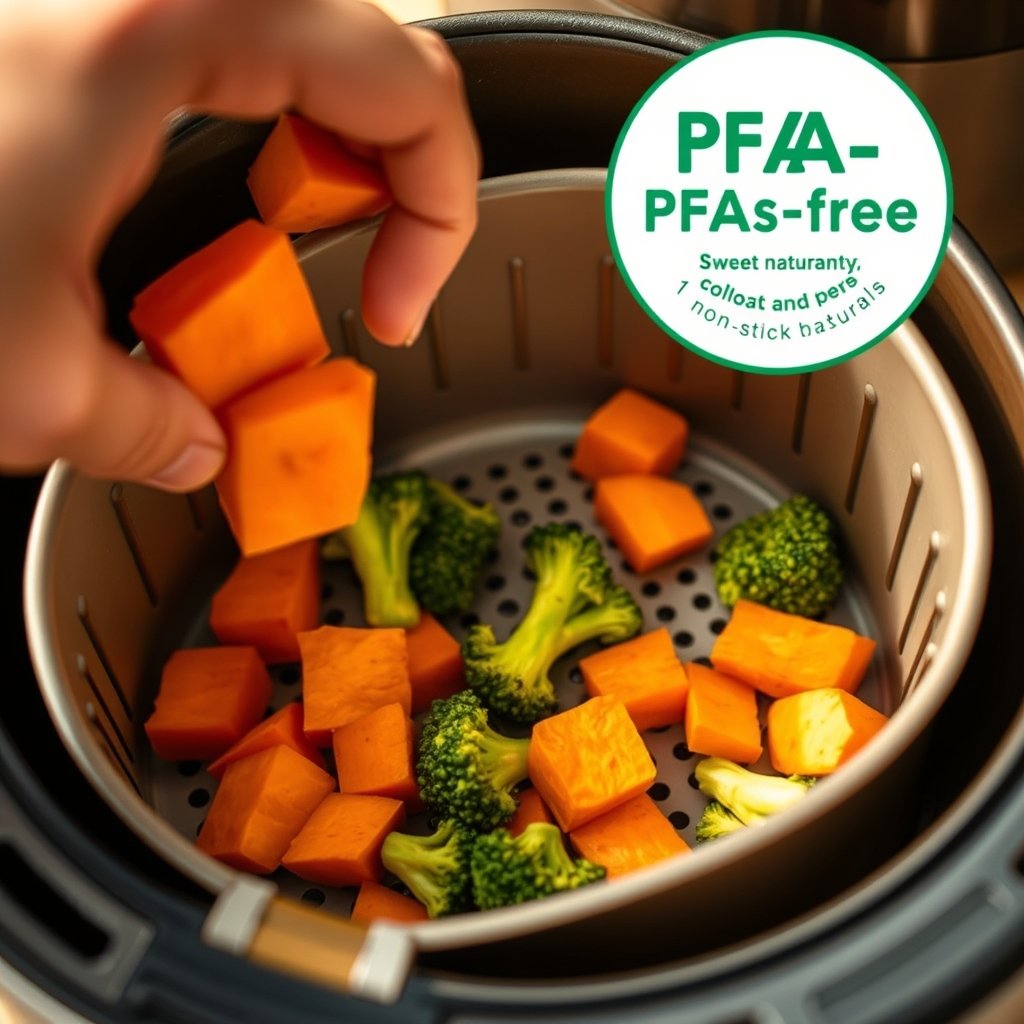
If energy use or efficiency is part of your criteria, be sure to compare the wattage and design in our Ninja vs Philips air fryer energy consumption guide. For family buyers, see more options at air fryer for large family 2026, where batch-cooking and model size are compared in detail.
Finally, ask for written confirmation from the brand or look to consumer communities for first-hand PFAS-free reviews, especially if purchasing less common models like Ninja’s Crispi (featured in the Ninja Crispi glass bowl air fryer review).
Advanced Analysis & Common Pitfalls of Shopping for Non-Toxic Air Fryers
The surge in PFAS-free air fryer interest exceeds what most guides tell you. But despite more models claiming “non-toxic,” these common pitfalls persist:
- No universal PFAS-free certification: Zero industry-wide standards have been launched for PFAS/PTFE-free air fryers as of 2026. All claims are manufacturer-specific—watch for greenwashing.
- Manufacturers don’t always disclose full material lists. Most will highlight one “chemical-free” surface, but only full basket and tray disclosures guarantee true safety.
- Large-capacity or premium models are scarce. Most family-size or multicooker air fryers use traditional non-stick due to manufacturing cost and consumer price expectations. The air fryer PFAS free 2026 feature breaks down which current large models are genuinely chemical-free.
- No clear price advantage and spotty cost data. As of 2026, detailed price comparisons between ceramic/stainless versus PTFE models are missing. Some ceramic models like Aria may match entry-level black-coated units, but not always for larger sizes.
- Misleading or partial labeling. Phrases like “PTFE-free exterior” or “ceramic crisper plate” are often used even when the main food basket contains non-stick chemicals. Check both internal and external components.
| Feature | Traditional Non-Stick | Ceramic/Glass/Stainless |
|---|---|---|
| Food Safety | May leach PFAS/PTFE after wear or overheating | No chemical leaching (if genuinely PFAS-free) |
| Availability (mid/large size) | Wide | Limited (few models 6q+) |
| Cleaning | Easy, but coating can chip/flake eventually | Requires gentle cleaning; ceramic is less slippery |
| Price | Entry-level, wide range | Comparable or premium for larger sizes; limited data |
| Certifications | None specific for PFAS-free | Still none; relies on “PFAS-free” branding |
If you’re looking for further comparison by capacity (vital for households), our large capacity air fryer buying guide helps buyers avoid undersized models or misleading specs.

Conclusion: How to Safely Buy a PFAS-Free Air Fryer
Finding a truly PFAS-free air fryer in 2026 requires more diligence than a quick Amazon search. Since there are no official standards, always verify food-contact surfaces, prioritize ceramic, glass or stainless models, and watch for mislabeling. If in doubt, choose models vetted by reputable guides and double-check user forums for new product updates. Demand continues to rise, and brands are slowly increasing non-toxic choices, but knowing what to look for is key.
No shortcut replaces reading the fine print. Use verified resources, question every brand claim, and for families or health-focused cooks, treat a PFAS-free air fryer not as a luxury, but as an essential investment in your kitchen safety. Ready to upgrade my current air fryer? Refer to our internal reviews for the latest model-by-model breakdowns, and share this guide to help friends and family cook safer meals.
Frequently Asked Questions (FAQ)
Are there any official certifications or standards for PFAS-free air fryers?
No, as of 2026 there are no government or third-party certifications, standards, or required labels. All PFAS-free and non-toxic claims rely entirely on manufacturer disclosures. Reference
Is ceramic actually safer than Teflon or PTFE in air fryers?
Yes. Ceramics are widely recommended because they contain no PFAS or PTFE and don’t break down into harmful chemicals. However, ceramic coatings can crack if mishandled; care is still necessary.
Which brands make the best PFAS-free or non-toxic air fryers in 2026?
Leading models include Typhur Sync (ceramic), Aria 7-quart (ceramic), and Wonder Oven Pro. Ninja’s Crispi is the top glass-bowl pick. Availability and size options are still limited compared to conventional models.
Can I upgrade my current air fryer to a PFAS-free basket?
Some models offer ceramic or stainless replacement baskets, but compatibility can be limited. Always verify that replacement parts are food-contact PFAS-free, not just “accessory” items.
Are all stainless steel air fryers PFAS-free?
No. Some “stainless steel” air fryers only use steel for the housing or exterior; the food tray or basket may still be coated with PTFE or another chemical. Always confirm the food-contact material.
—